When we left Kuala Lumpur, we had no idea that the next few days would feel like stepping into a travel-book photograph—and earning it with a good deal of climbing. We landed in Surabaya as evening approached. A Toyota Alphard we had reserved two months earlier was waiting at the airport. The three of us had its wide reclining seats, leg rests, seat ventilation, entertainment screen and even karaoke almost to ourselves. Those comforts mattered on East Java’s long, winding roads. Once we left the major highways, a distance that looked modest on the map could take three or four hours among motorbikes, small trucks and buses.
Malang, a hotel like a museum
Night had fallen by the time we reached Hotel Tugu Malang. Walking inside felt like entering a private collection: old photographs, carved wood, colonial-era furnishings and objects connected to the region’s Chinese and Javanese histories filled the halls. Corridors opened into courtyards and gardens, then turned toward still more rooms. Our Jade Suite had high ceilings, heavy doors, antique furniture and a bathtub so large that it became the first thing we talked about.
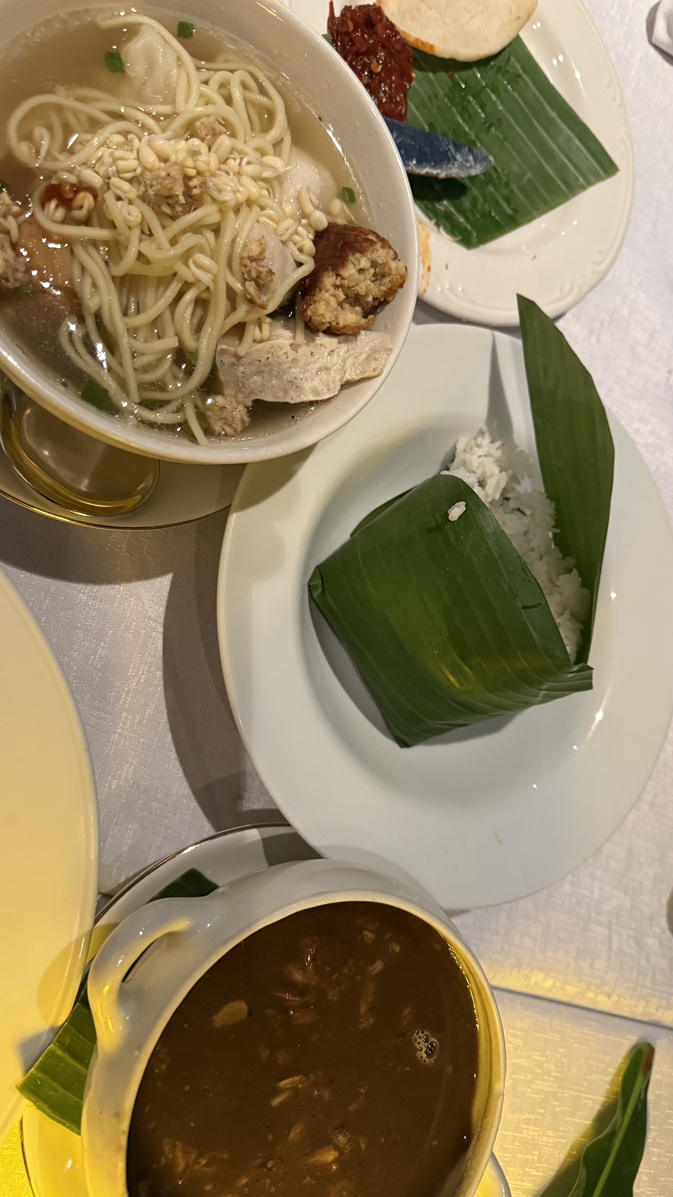
Dinner continued the sense of cultural overlap. We ate dishes such as rendang, satay and dark Javanese beef soup alongside noodles, seafood and coconut-rich preparations. Sweet heat, lemongrass, turmeric and peanut sauce moved through the meal. It made the old phrase about Chinese migration to Southeast Asia feel less like a history-book heading and more like something we could taste.
Down to Tumpak Sewu
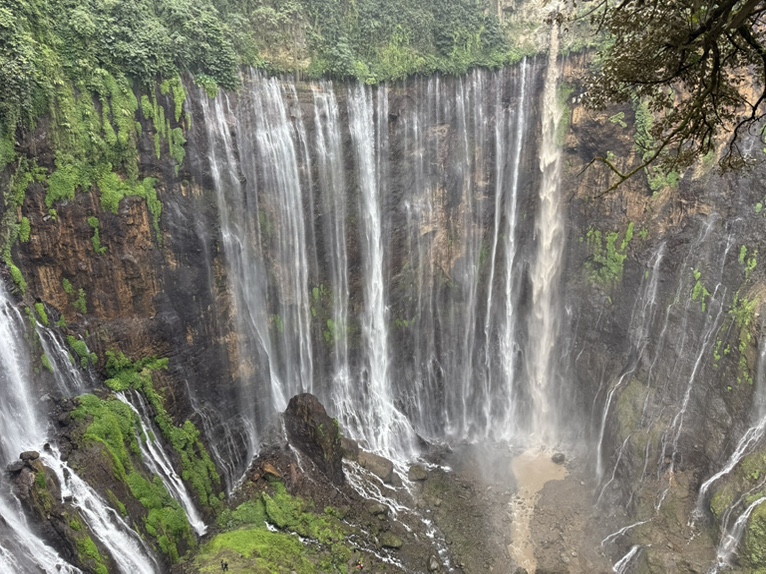
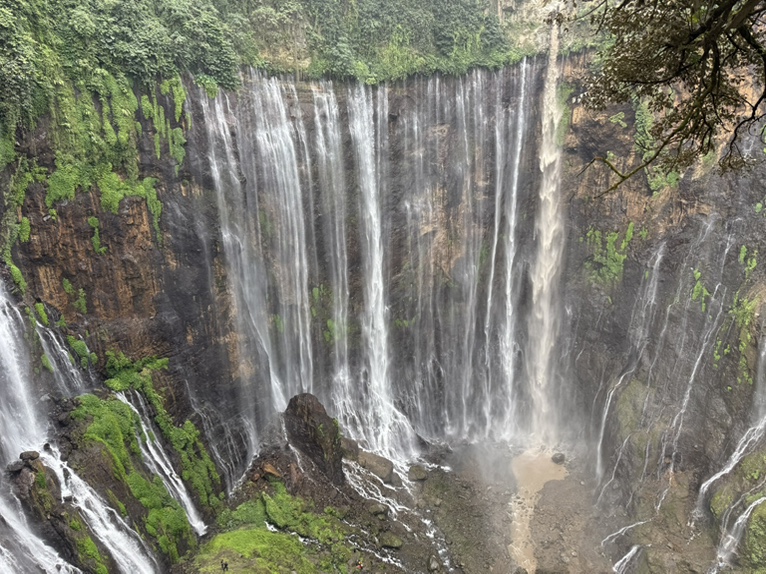
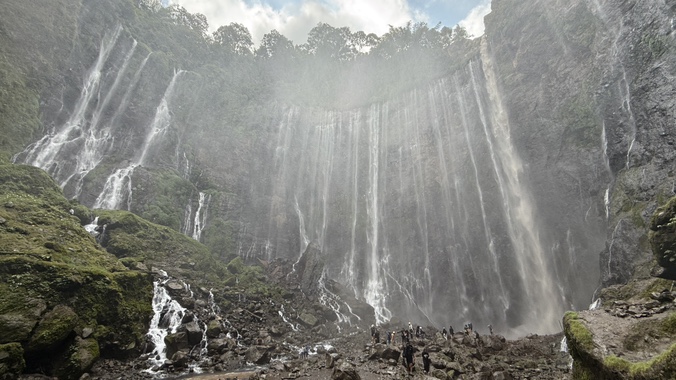
The next morning we drove for hours through rural roads to Tumpak Sewu, whose name evokes “a thousand waterfalls.” The viewpoint was beautiful, but the real encounter required a demanding descent. We negotiated steep stone steps, muddy paths, bamboo ladders and wet rocks, holding the rails where we could. The sound grew louder and the air wetter as we went down. Rounding a rock wall, we suddenly stood inside a natural amphitheater: streams of water falling from an enormous ring of green cliffs. Spray rose around us, and sunlight caught it in a faint rainbow.
The climb back was harder. Our legs ached by the time we reached the parking area, and our clothes were soaked with sweat. The guide joked that nearly every first-time visitor calls it a hiking workout. He was right. The contrast stayed with me—the heat of the climb, then the cool mist at the bottom; the physical effort, then that astonishing view.
We had little time to rest before another long drive toward Bromo. The road climbed from the warm lowlands through villages, terraces and forest to a high plateau. By evening, the light shirt that had been enough near the waterfall no longer kept me warm. We arrived at Plataran Bromo feeling as though we had crossed seasons in a single afternoon.
The volcano without the sunrise crowd
In the morning, the hotel’s viewpoint looked out over mountains and cloud-filled valleys beneath a sign reading “The Swiss of Java.” We ate breakfast in the cool air instead of setting out at three in the morning for the famous Bromo sunrise. Around nine, we boarded an older Toyota four-wheel-drive jeep. It handled narrow, rocky tracks and close passes with other jeeps better than I expected.
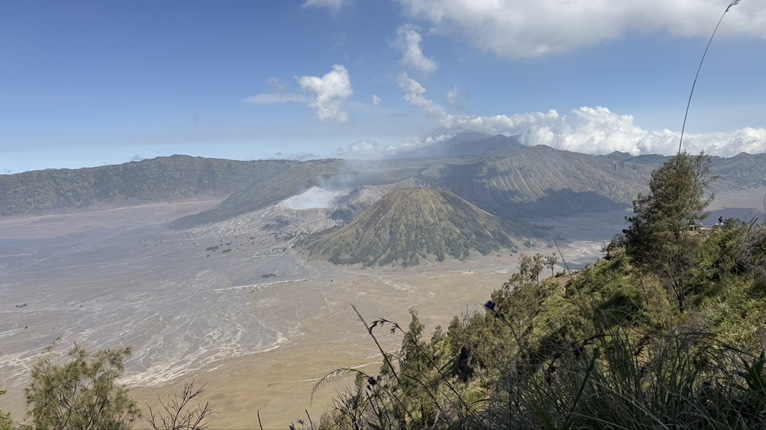
The Sea of Sand appeared ahead: not an ordinary desert but a broad plain of volcanic ash inside an ancient caldera. Younger volcanic cones rose from it, Bromo among them, sending up white smoke. At the base, Tengger residents sold flowers that visitors could offer at the crater, a practice connected with the Yadnya Kasada tradition. We climbed the steps toward the rim. The sulfur smell strengthened, and at the edge we could look into a living volcano for the first time.
Later we drove to King Kong Hill, where sunrise viewers had already gone. Stalls were closed and the platform was almost empty. In the clear midday light we could see Mount Batok in front, smoking Bromo behind it, and distant Semeru. We had given up the classic dawn photograph but gained a quiet, unhurried view of the whole volcanic landscape. For our family, it was a good trade.
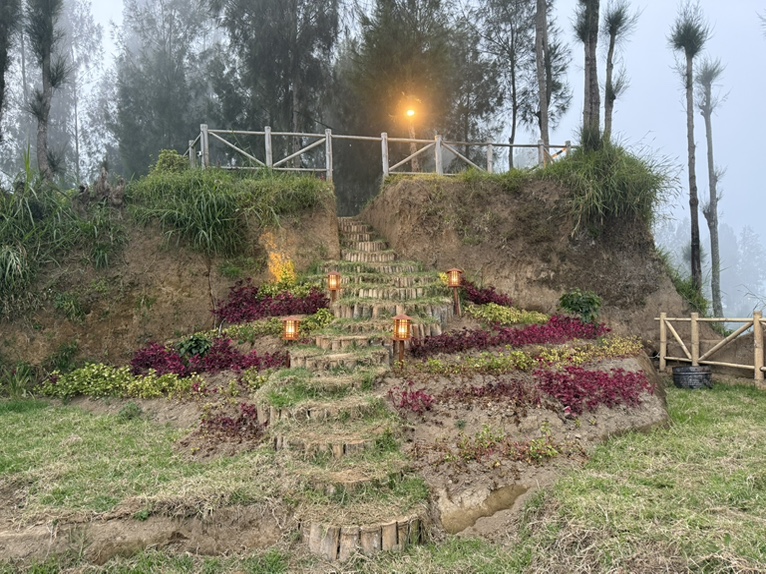
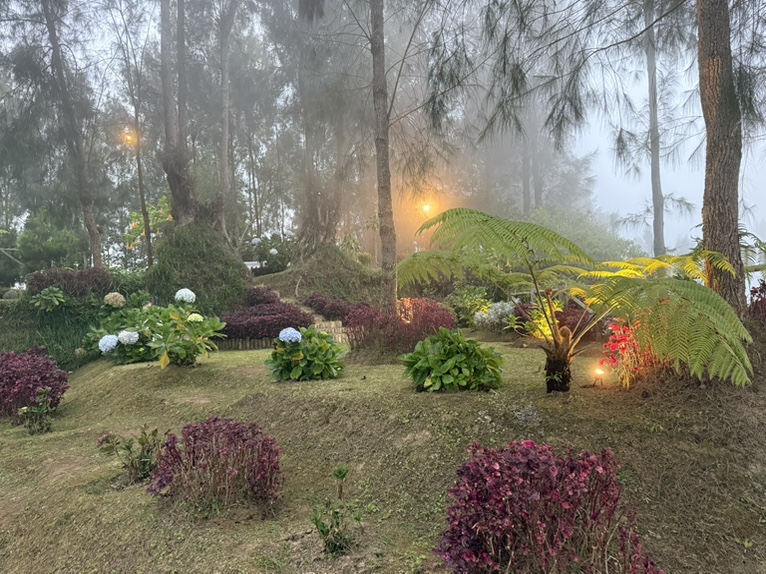
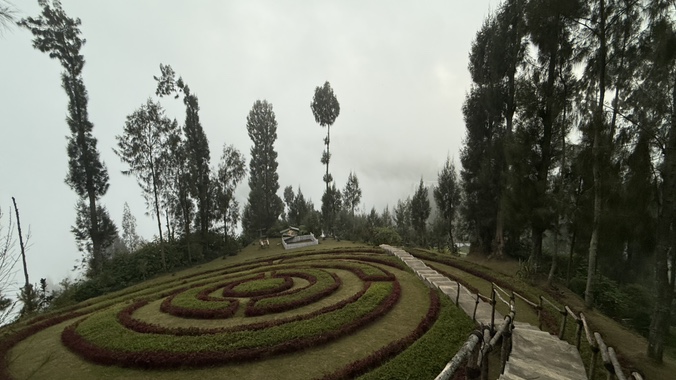
A brief mountain shower crossed the valley on our return, leaving one side in sun and the other in mist. At the hotel, what we had imagined would be a cup of tea turned out to be a generous complimentary afternoon spread of savory snacks, local cakes, fruit and desserts. A later tour of the extensive grounds showed us gardens, lawns, event spaces and a treehouse above the valley.
By then I was laughing that East Java felt less like a restful vacation than an endurance course: hours in the car, a steep waterfall descent and ascent, a jeep across ash, a climb to an active crater. Yet each evening ended in a warm room, a good meal or tea in a garden. The effort made the waterfall, volcano and cloud-filled plateau feel more real. Sitting in the garden as the light faded, I felt that Bromo had given us not only a dramatic view but a different, slower sense of time.
Photo journal
Reader Discussion · 0
No comments yet. Be the first to share your experience.